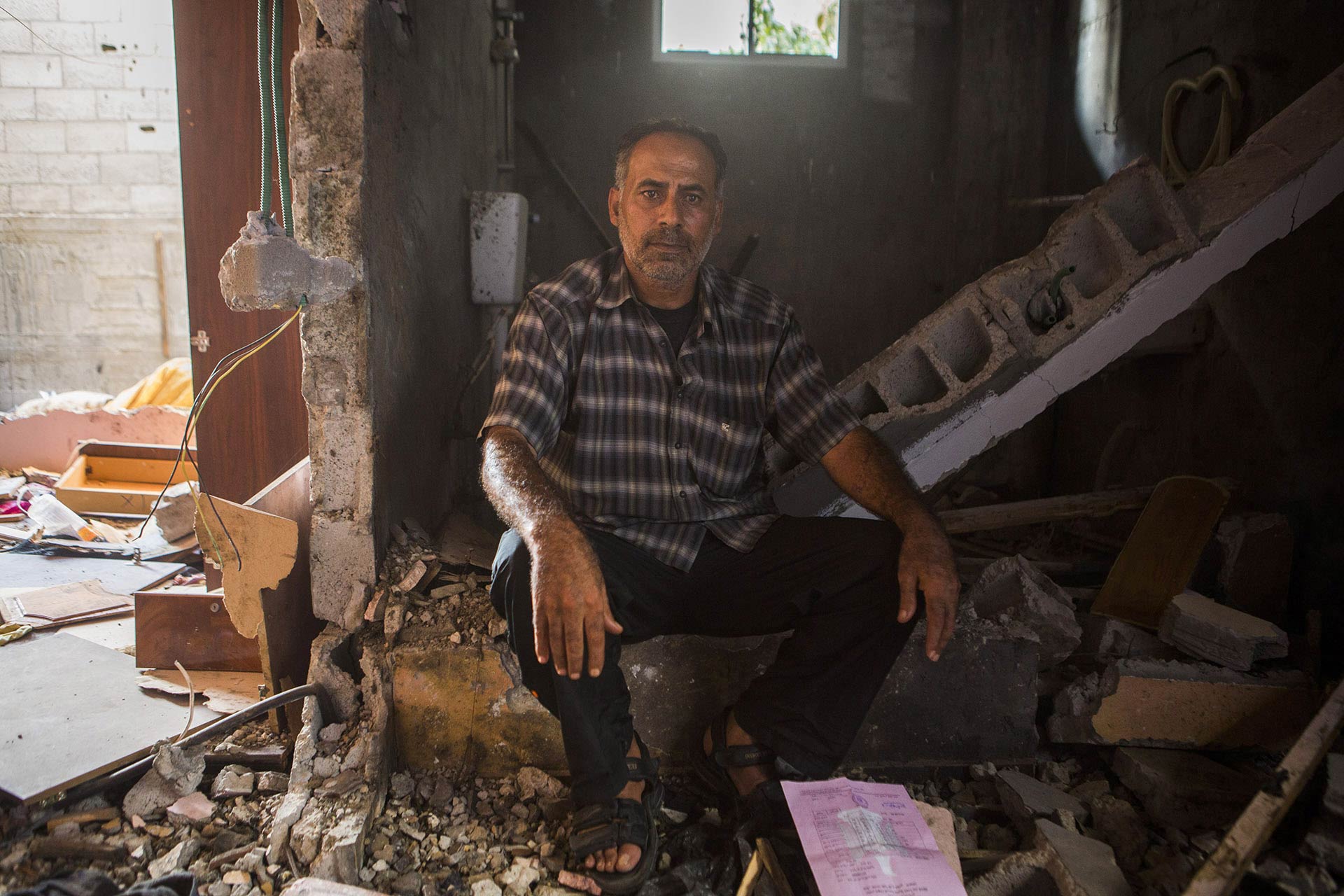
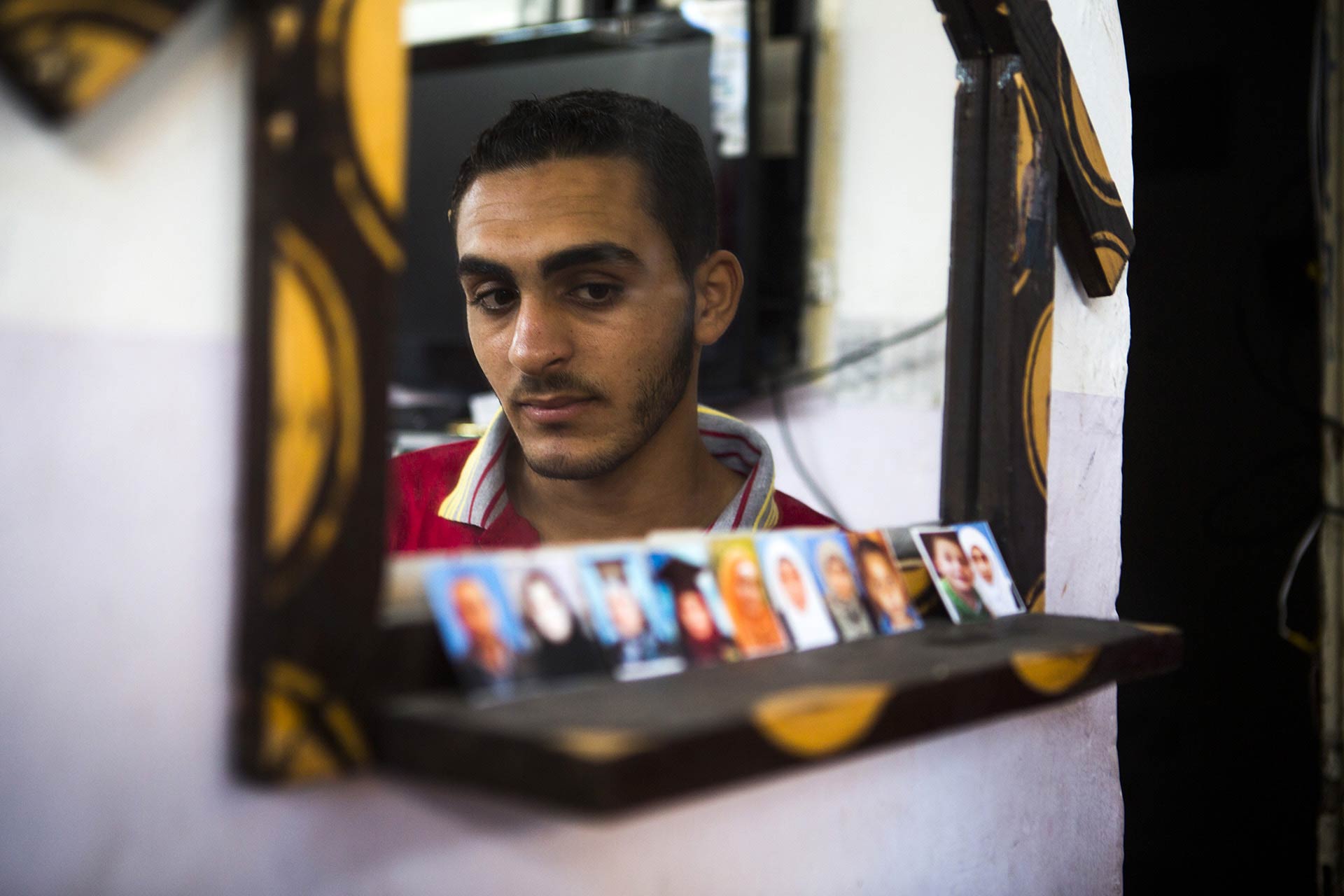
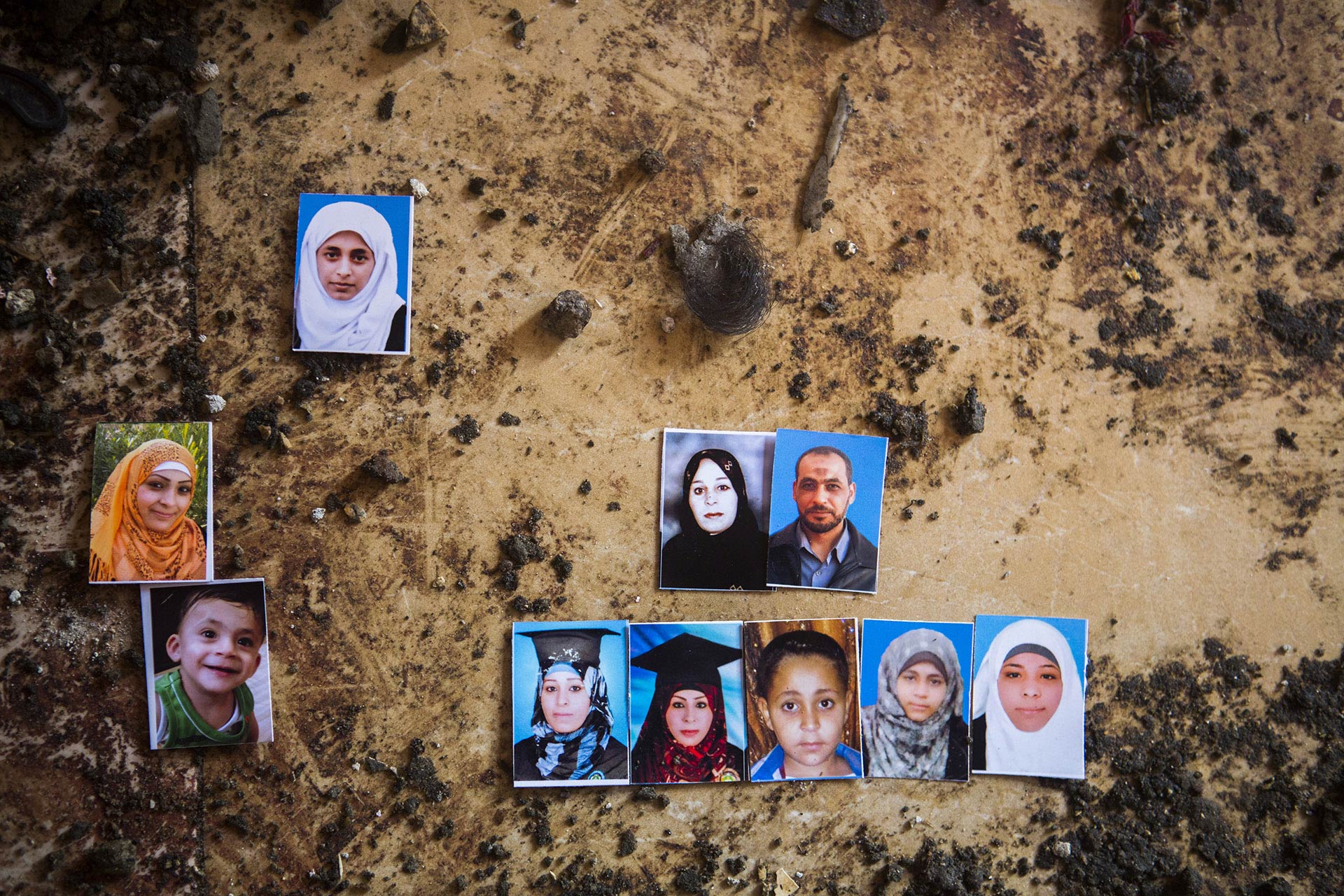
Naim sat in a room full of birds, drinking his morning coffee. At the end of July, the Israeli army had warned the people of East Jabaliya to evacuate the area. Naim was torn: should they leave everything behind and run? Who would take care of the birds? His brother Abdelkarim’s house, where they would have been welcome, had a thick cement roof, something that could protect them from debris in case of a nearby explosion. Above Naim’s head was a thin sheet of asbestos, not even good enough to shield his family from the merciless heat of the summer sun. Naim’s 17-year-old son, Ala, was on his way to pick up groceries from the market when he saw many people leaving the area. Some people were carrying their belongings, others were riding on donkey carts or in tuk-tuks, a few had cars, filled up to the roof. When he got back home, he convinced his father that they too should evacuate their place and go to their uncle Abdelkarim’s house, also in the Jabaliya refugee camp, but a much more solid construction.
The family sat in Abdelkarim’s house, eating lunch, telling each other stories, joking and trying to turn their forced evacuation into a family gathering. The two brothers were very close, so were their wives. Later on that day, Ala’s older sister, Wafaa’, brought up the topic of marriage. She said their mother had someone in mind for Ala. He listened, but right away laughed the idea off.